During the republican period, the road connecting Cupra to Fermo passed through Campofilone, and the two city gates marked the entrances to the village from the north and south.
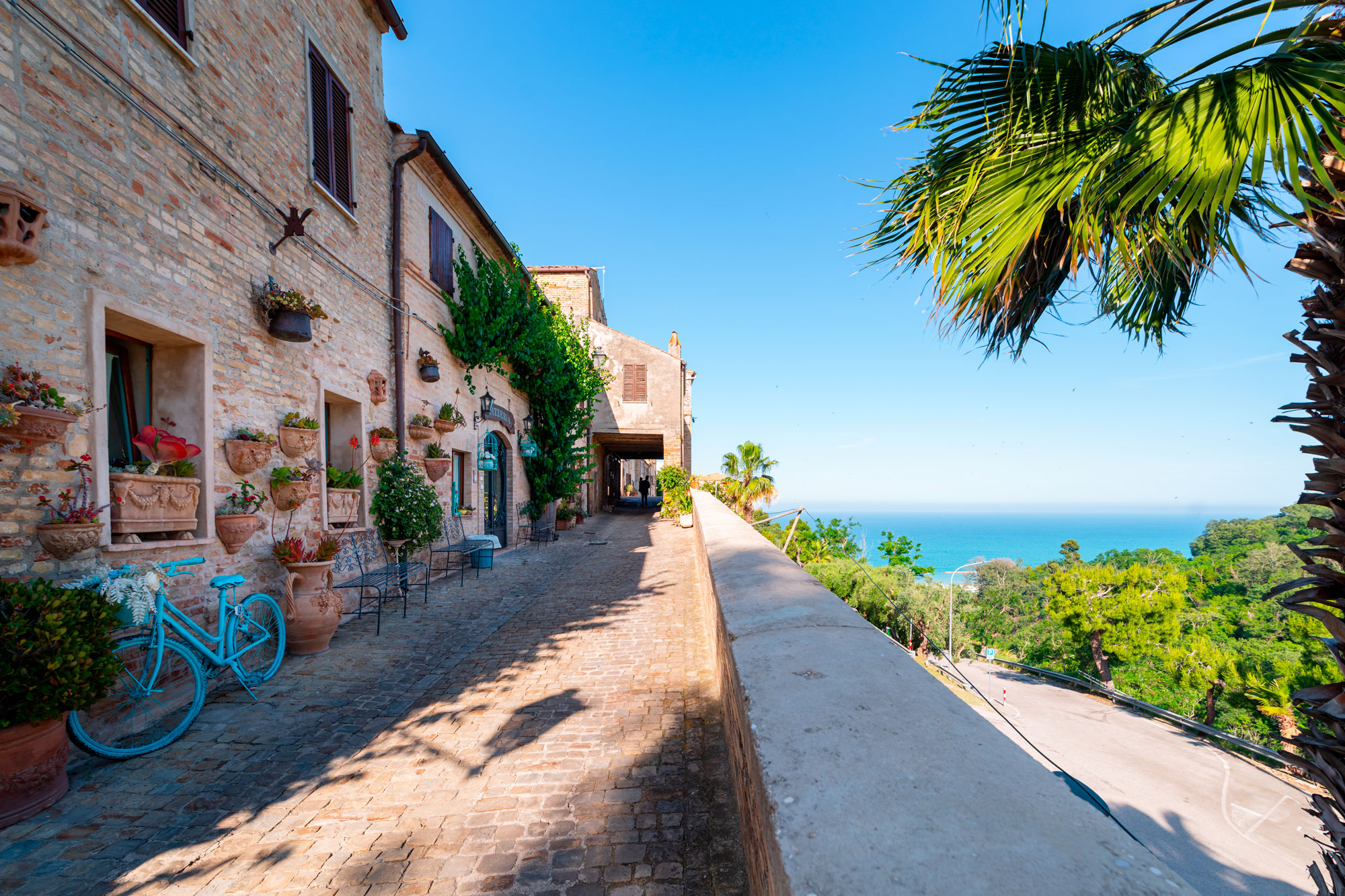
Porta da Bora, rebuilt during the Renaissance and later incorporated into the surrounding homes, has retained its original function as an access point to the town, becoming a lively daily passage for residents and travelers. Unlike other fortified gates that have been lost or transformed, this one has maintained a continuity of use, adapting to urban transformations without losing its identity role.
From here, the ancient and steep paths of Contrada Molino and Contrada Monterubbianese branched off, historical routes that connected the fortified nucleus of Campofilone to the fertile Aso valley, allowing the passage of people, animals, and agricultural products. Passing through Porta da Bora meant leaving the protection of the village to reach the fields, mills, and workplaces, in a continuous exchange between rural and urban life. Today, despite the building transformations that have partially hidden it from view, the gate remains a tangible sign of the centuries-old relationship between the town and its territory.
The Porta da Sole, built in the early XI century, served as the main access to the Campofilone castle throughout the Early Middle Ages, acting as a control point and strategic post for the entry of travelers and goods. Crossing that threshold meant entering the fortified heart of the village, where communal life revolved around artisan activities and territorial defense.
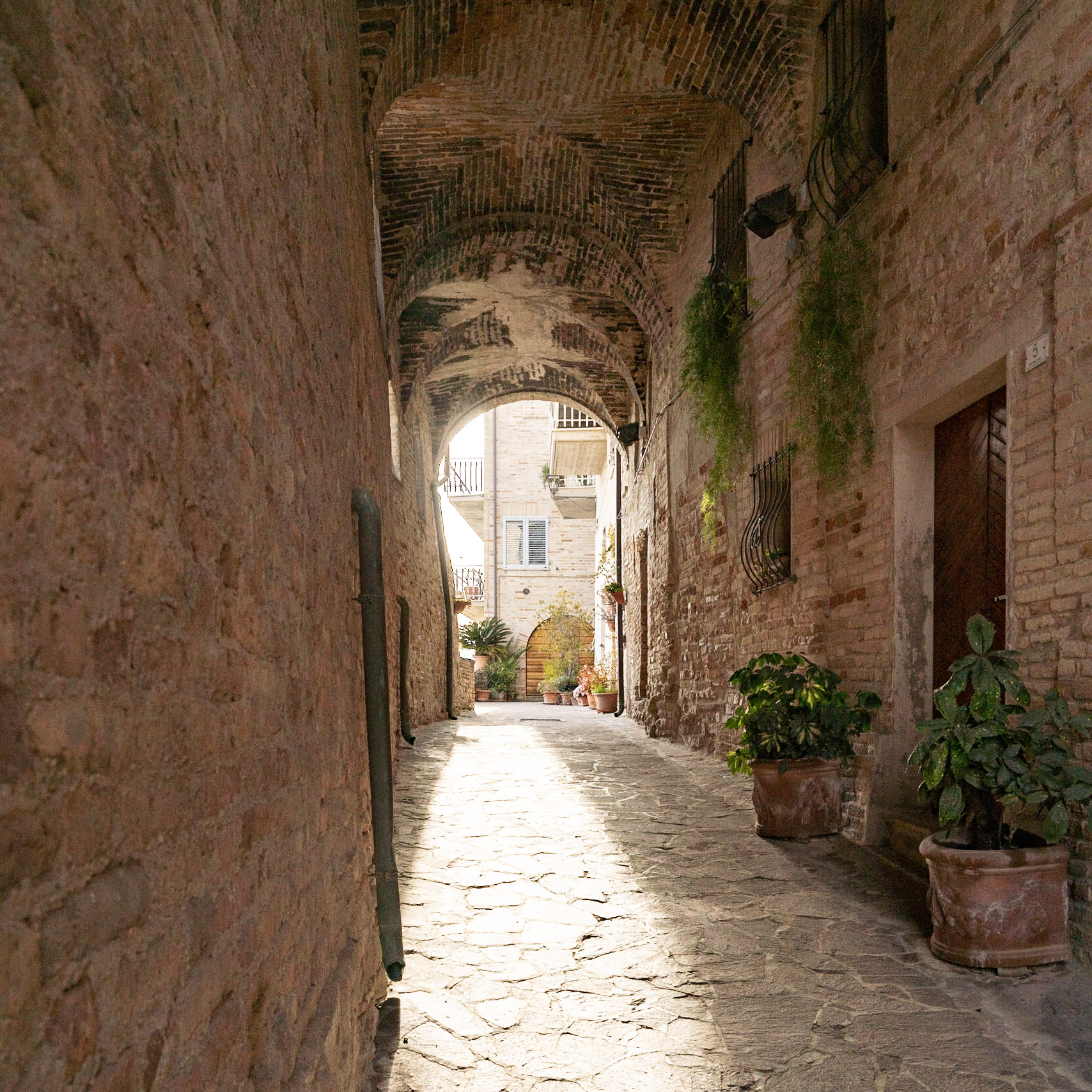
As the centuries passed and military functions declined, the door gradually lost its prominence. By the end of the 19th century, neglect and disuse compromised its original structure. Today, what remains are the ancient brick walls, a testament to its original grandeur, and a suggestive covered passage with ribbed vaults, likely connected to the ancient fortified passageway. This architectural fragment, though diminished, still retains the charm of the time and allows one to imagine the solemn entrance to the medieval village when the Porta da Sole was a symbol of protection and prestige for the entire community.