House of Artists – Municipal library
Altidona
Creative space and a lab for visual and contemporary languages, as well as the headquarters of the municipal library G. Nepi.

 Italiano
 English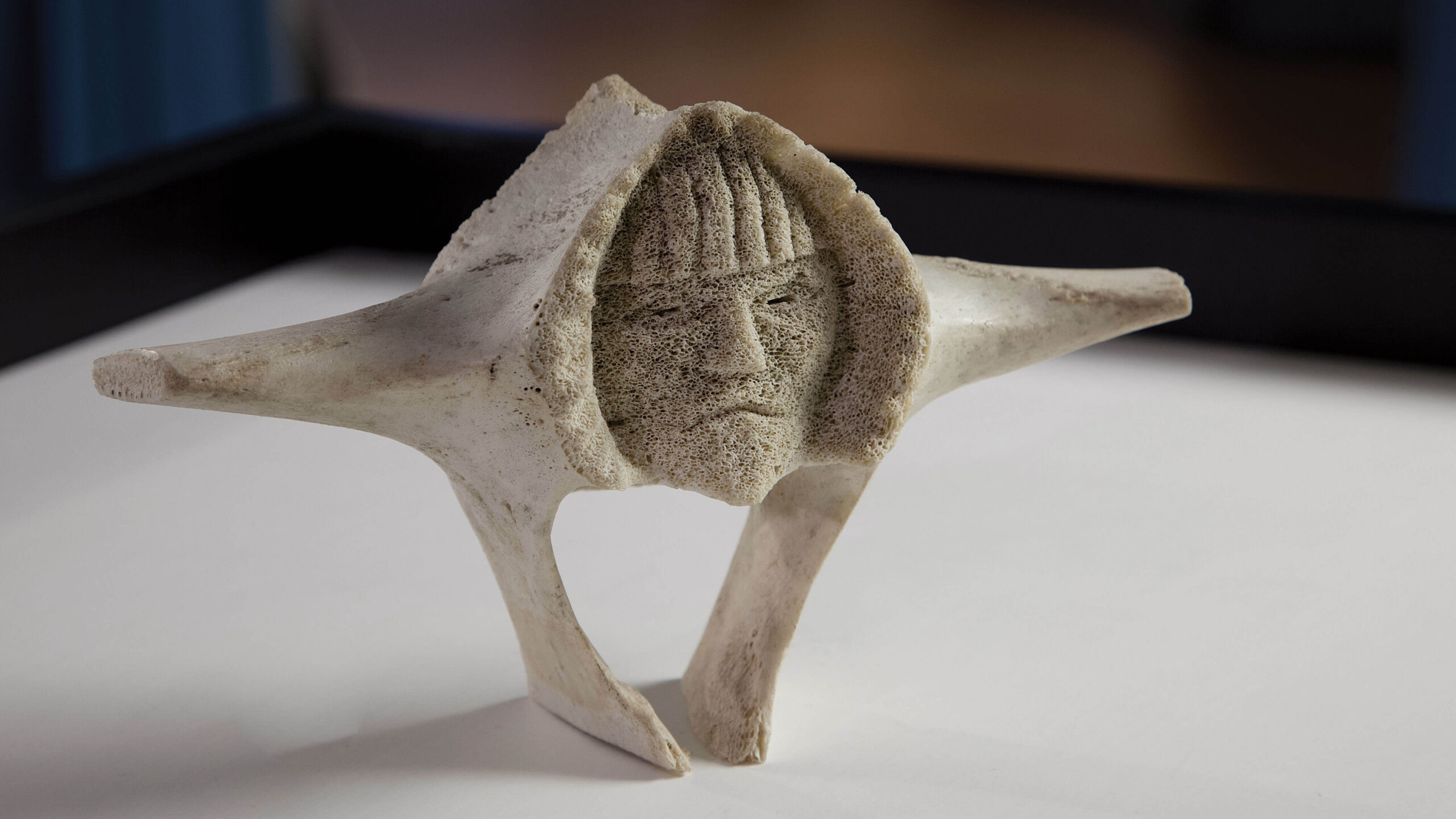
Located in the ancient residence of the Paccaroni family, characterized by a striking rough-hewn turreted facade, the scientific museum complex of Fermo brings together two exceptional collections: the Polar Museum "Silvio Zavatti" and the Natural Sciences Museum "Tommaso Salvadori".
The building, the former residence of the Paccaroni family, now houses the Scientific Museums of the city: the Polar Museum “Silvio Zavatti” and the Natural Sciences Museum “Tommaso Salvadori”. The ancient noble palace features a facade that imitates a decorated rough-hewn turret (possibly constructed in the same location as an old noble tower).
Inside, the noble floor is richly decorated with tempera paintings dedicated to the gods and the muses.
The Polar Museum “Silvio Zavatti”
The Polar Museum “Silvio Zavatti” is the only museum in Italy dedicated to the environments, peoples, and Italian Arctic polar research. It was established in 1969 in Civitanova Marche at the behest of Zavatti, founder of the Polar Geographic Institute of Forlì in 1944 (of which the museum is an integral part).
In 1985, the Polar Museum “Silvio Zavatti” was donated to the Municipality of Fermo and inaugurated in 1993 at Villa Vitali. From 1999 to today, it has undergone profound changes: the necessary inventorying of the exhibited objects has been followed by a new organization of the structure, more rational and in line with modern museum needs.
Within the museum, we can visit the materials collected by explorer Silvio Zavatti during his 5 polar expeditions, enriched by recent acquisitions (including donations from Jean Malaurie, Lino Brillarelli, and Luciana Gabrielli).
The Natural Sciences Museum “Tommaso Salvadori”
The Tommaso Salvadori Natural Science Museum contains the ornithological collection from excursions and hunting trips made by Tommaso Salvadori in the Marche region (especially in Fermano and Ascolano) and in Sardinia. The collection includes specimens of the Marche and Italian bird fauna, including rare species such as the Osprey, the Monk Vulture, the Bearded Vulture, and the Eurasian Eagle-Owl. Many of these specimens are mentioned by Salvadori in his most authoritative works.
In 1930, his great-granddaughter, Mrs. Gladys Salvadori Paleotti Muzzarelli, donated the ornithological collection along with the storage cabinets and Salvadori’s complete works to the city of Fermo to ensure they were properly preserved and displayed to the public.
Tommaso Salvadori personally prepared most of the specimens in his collection, taking care of the taxidermy technique and selecting the supports used. In particular, the poses of the subjects and the lively attitudes of many of them betray a long and passionate study of their ‘live’ behavior, certainly the result of hours of constant and patient observation in nature that only the future great scientist could undertake during his explorations.
Palazzo Paccaroni is located along Corso Cavour, in Fermo’s historic centre, in the San Bartolomeo district. If arriving by car, take the A14 motorway and exit at Fermo–Porto San Giorgio, then follow signs for Fermo town centre. Alternatively, take the SS16 Adriatica road and continue uphill towards the historic centre.
The reference railway station is Porto San Giorgio–Fermo, connected with the main towns and cities along the Adriatic railway line. From the station, Fermo town centre can be reached by shuttle bus or local transport; Palazzo Paccaroni is located in the historic centre, along Corso Cavour.
To visit Palazzo Paccaroni, it is advisable to use the parking areas serving the historic centre, such as Girfalco car park, Station car park or Cathedral car park. A Limited Traffic Zone is active in the historic centre, so always check local signs and any access restrictions.
Creative space and a lab for visual and contemporary languages, as well as the headquarters of the municipal library G. Nepi.
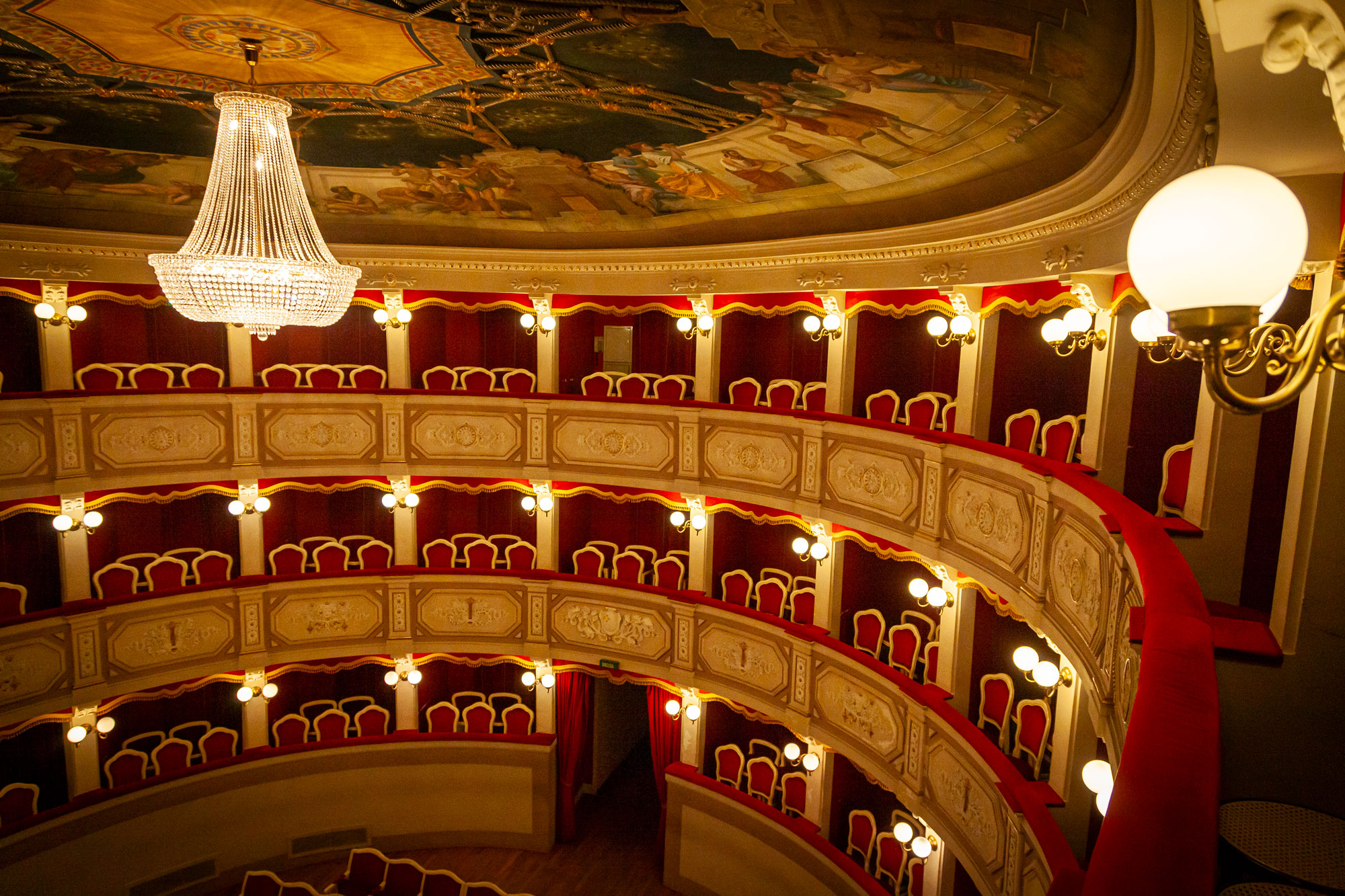
Architectural jewel of the 19th century, the Theater of Porto San Giorgio was completed in 1817 based on a design by architect Giuseppe Locatelli. Inside, the beautifully frescoed ceiling, painted in 1910 by Sigismondo Nardi, showcases an allegory of the arts and human destiny, bestowing remarkable beauty and elegance upon the city today.
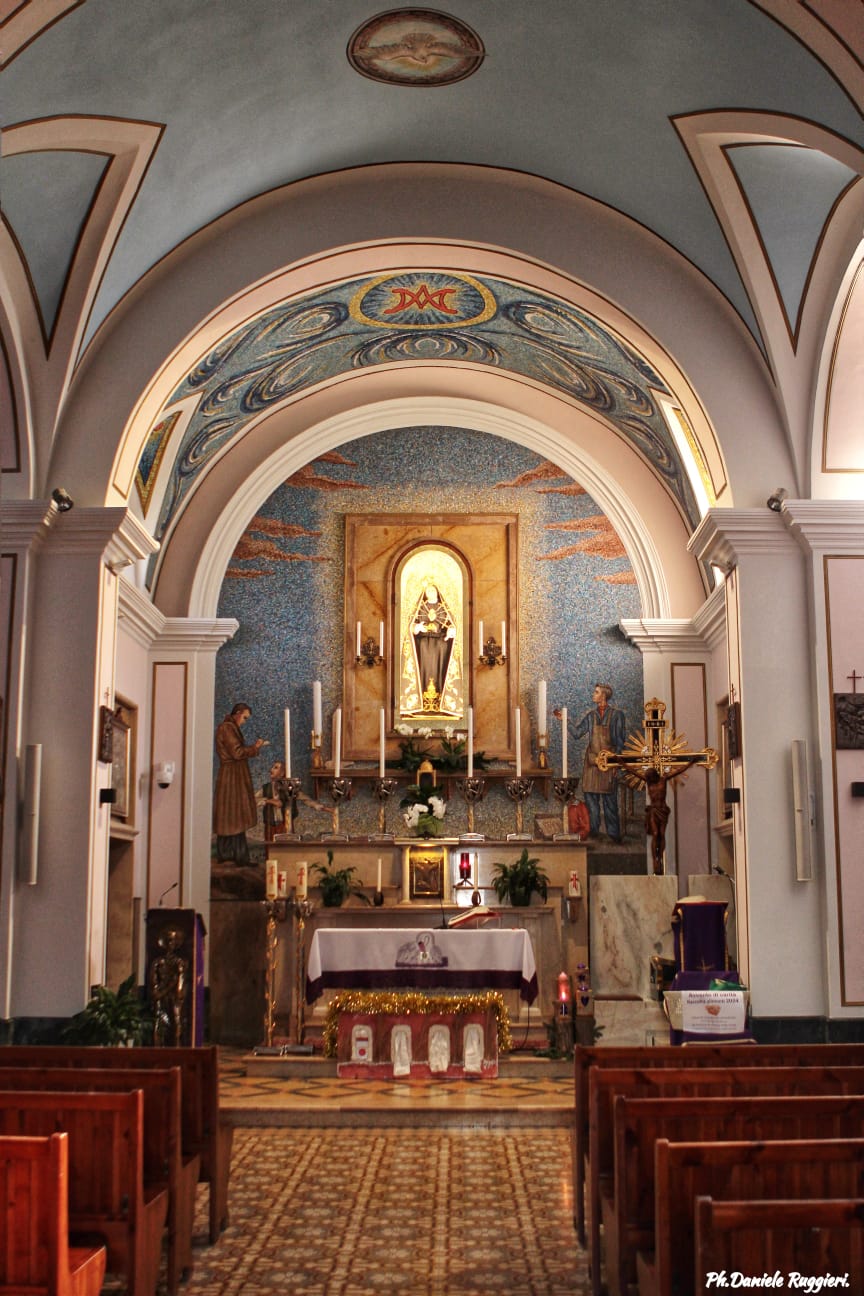
The Sanctuary of Santa Maria della Corva is a place of deep Marian devotion. Originating from the 16th century and originally dedicated to Saint John the Baptist, the church became famous for the miraculous event of 1829, when the statue of the Virgin of Sorrows opened its arms before the faithful.