The Cugnolo Forest is a small thicket of Mediterranean scrub just a few hundred meters from the sea. The area is protected for its exceptional botanical and morphological value: indeed, the presence of the strawberry tree, buckthorn, holm oak, and other species confirms this. A walk in the forest is unmissable; it is a short and easy path of about two kilometers, where luckier visitors may encounter the Italian sparrow, the bee-eater, the badger, or even the fox.
In the context of the characteristic village of Torre di Palme, the short walk to the Cugnolo Forest takes place along a section of fossil dune from the Pliocene, just a few hundred meters from the sea.
The route through the thicket, surrounded by the countryside, is protected by the Marche Region as a Floristic Area, as it represents one of the few remnants of Mediterranean vegetation along the Marche coastline due to the presence of strawberry tree, buckthorn, holm oak, and other tree varieties.
The fauna is also diverse, with a good level of biodiversity due to the numerous ecological situations created among the fossil sands (polecat, badger, fox, Italian sparrow, etc.).
The path is a loop starting from the parking area just above the end of the village, on the road to Lapedona, and is easily identifiable thanks to some wooden stakes placed by the local section of the CAI.
It can be walked in about 30 minutes with some ups and downs, except for the Grotta degli Amanti, where you can use a rope to overcome a sloped section of about 5 meters.
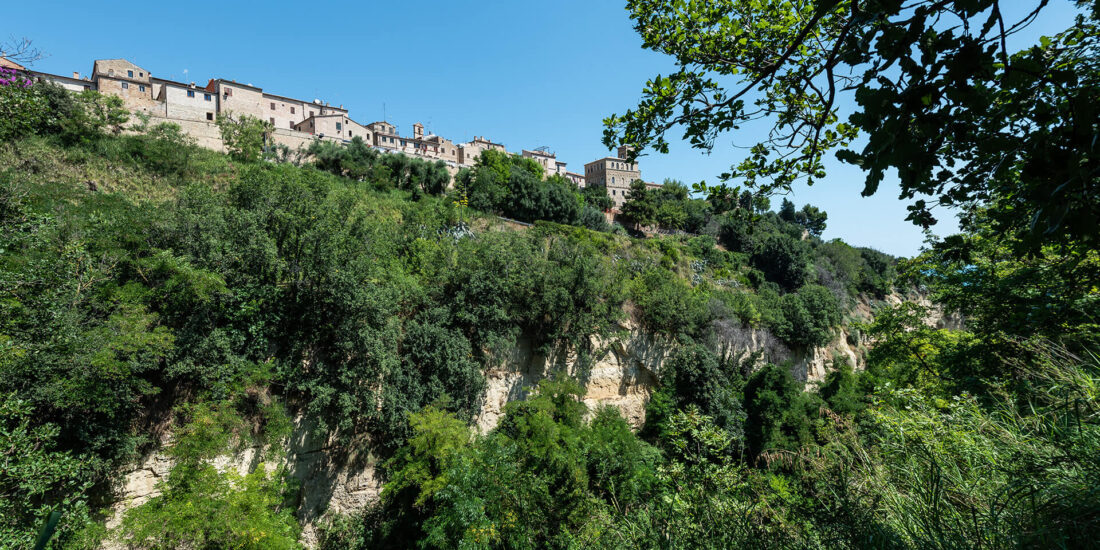
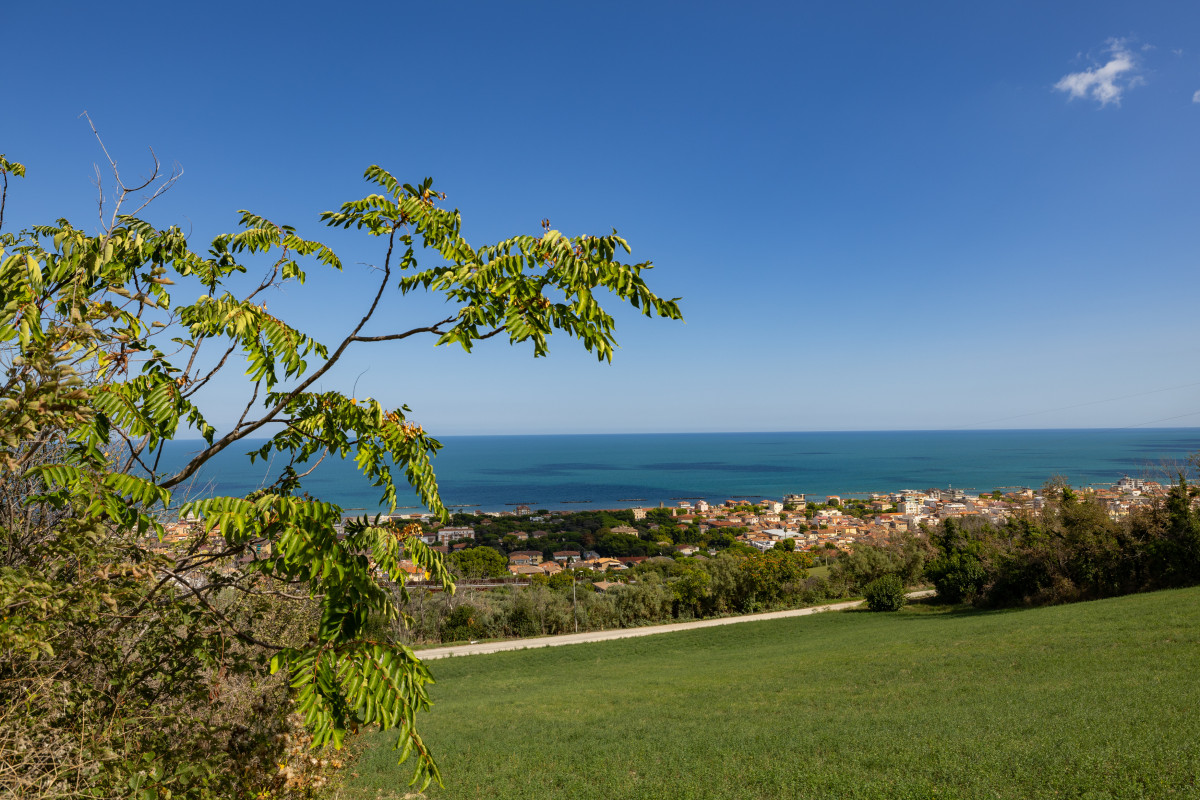
The path, wide and well-maintained, descends into the San Filippo Ravine and enters a grove dominated by well-grown saplings and ancient oaks, offering picturesque views of Torre di Palme and the Pliocene cliff. After a few minutes of walking, one can catch sight of the sea, as if from a shady and cool balcony.
The view of the village from the abyss created by the water of the Fosso Cupo is unique; its brief journey to the sea has made it resemble a canyon formed by the steep slope and the easily erodible material of the fossil dune.