Monte Cacciù
The viewpoint of Monte Cacciù offers a 360-degree panorama that encompasses the entire Adriatic coast, the gentle Marche hills, and, on clearer days, the imposing chain of the Sibillini Mountains.
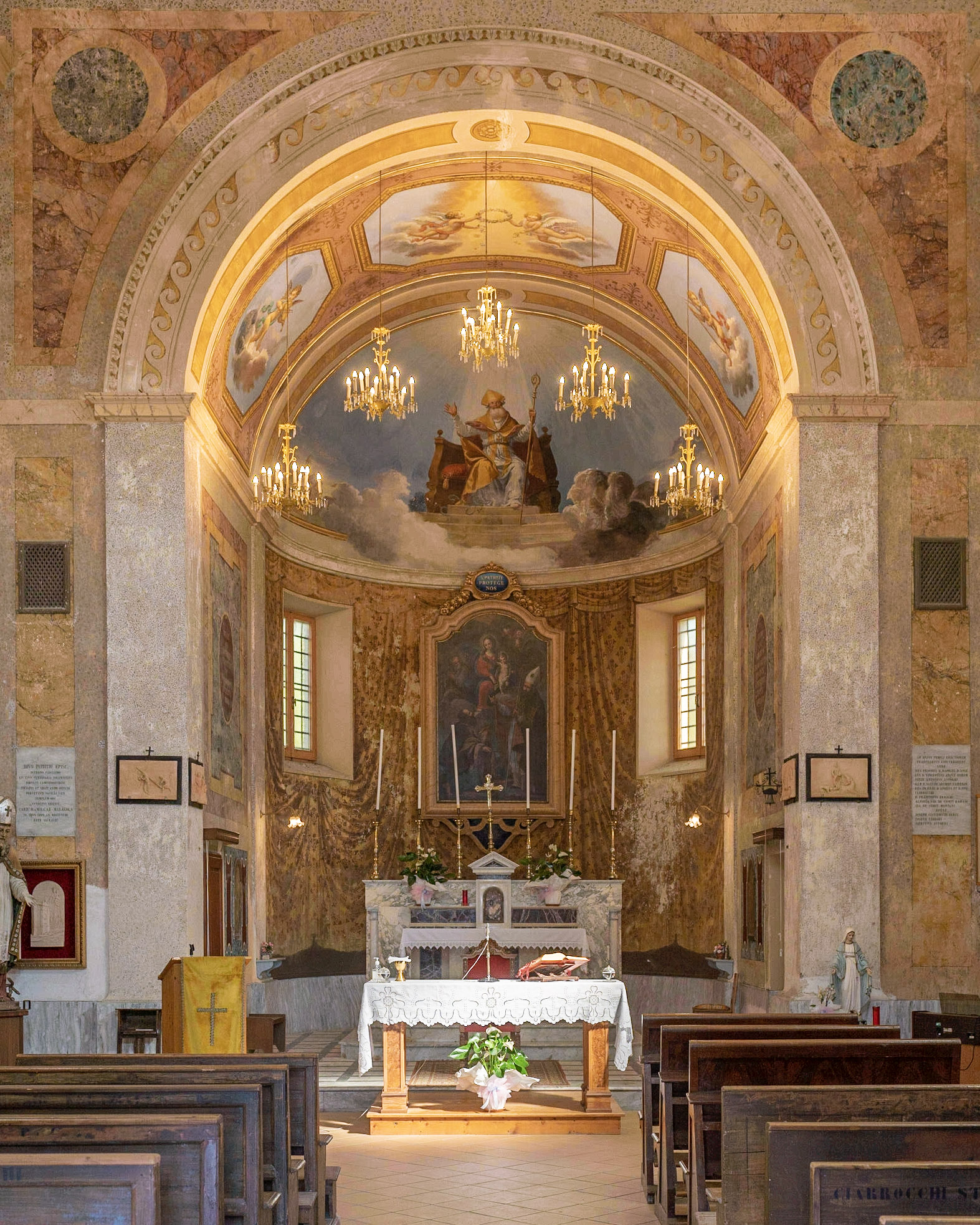
Always regarded as the 'church of the people', it was consecrated on September 10, 1893. Notable are also the frescoes of the Church of San Patrizio, by Luigi Fontana, depicting San Patrizio blessing the village, which testify to the importance of the local artistic school.
The Church of San Patrizio, originally built at the end of the 16th century next to Porta Marina, was demolished in the 19th century and rebuilt a little further north, where it still welcomes worshippers and visitors today. Always regarded as the ‘church of the people’, it was consecrated on September 10, 1893.
In 1924, it was enriched by a bell tower, built thanks to the contributions of veterans of the Great War, while two years later Aristide Bernardini donated the bells. The interior houses works of great artistic value: an altarpiece from the 18th century depicting the Madonna with Child, San Bartolomeo, San Patrizio, and San Giuseppe; the painted semi-dome by Luigi Fontana, with San Patrizio blessing the village; stuccoes and decorations by his pupil Niccolò Achilli; and a 17th-century painting of Sant’Antonio da Padova by an anonymous author.

The historic centre of Campofilone stands on a hill overlooking the Aso Valley. If arriving by car, take the A14 motorway, exit at Pedaso and continue towards Campofilone following local signs.
The nearest railway station is Pedaso, on the Adriatic railway line. From there, Campofilone can be reached by local transport connections or by taxi.
To visit the historic centre, it is advisable to leave the car in parking areas near the entrance to the village and continue on foot. The main access is through Porta Marina, along Via Vittorio Alfieri. During busier periods, check local signs and any access or parking restrictions.